Physical Address
304 North Cardinal St.
Dorchester Center, MA 02124
Physical Address
304 North Cardinal St.
Dorchester Center, MA 02124


Hostinger is a popular name in web hosting, but the right host depends on more than an attractive starting price. Renewal costs, server resources, performance, security, and support can change the overall value.
We compared five Hostinger alternatives, YouStable, BigRock, HostyCare, UltaHost, and HostPapa, based on the features website owners actually need. The comparison covers storage, caching, security, backups, support, plan resources, pricing, and upgrade options.
Whether you are launching a blog, running a WordPress website, managing a small business site, or expecting traffic to grow, this guide helps you see where each alternative fits and what you get for your money.
Hostinger works well for many websites, but your choice can change based on long term cost, performance, support, and scalability. Promotional pricing may look attractive initially, while renewal rates, resource limits, caching, storage, and upgrade options can affect the value over time. Comparing alternatives helps you find hosting that better matches your website type and expected growth.
| What Matters | Why It Matters | What to Compare |
| Pricing | Introductory rates may differ from long term costs | Renewal price, billing term, included features |
| Performance | Different websites need different server resources | NVMe, caching, CPU, RAM, CDN |
| Support & Growth | Growing websites may need more control and resources | Support, migration, VPS, dedicated options |
The five alternatives, YouStable, BigRock, HostyCare, UltaHost, and HostPapa, take different approaches to hosting. Comparing their features and pricing makes it easier to choose a plan that fits your website instead of simply choosing the cheapest option.
We compared each provider on the factors that matter once a website is live, including server performance, security, pricing, support, and the ability to handle future growth.
| Factor | What We Checked | Why It Matters | What We Found |
| Performance | NVMe/SSD storage, CPU, RAM, caching, CDN, and bandwidth | These resources influence how efficiently websites handle files, databases, and visitor requests | Shows the performance resources available with each hosting plan |
| Security | SSL, backups, malware protection, DDoS protection, and firewalls | These features help protect websites, accounts, and stored data from common threats | Shows the security measures included with the relevant plans |
| Plans & Pricing | Starting price, renewal cost, billing term, storage, websites, and email | Promotional pricing does not always reflect the long term hosting cost | Shows what resources and features you receive at each price level |
| Support & Scalability | Support, migration, control panels, developer access, VPS, and dedicated options | Website requirements can change as traffic and technical needs increase | Shows whether the provider offers practical options for future growth |
This comparison looks beyond the cheapest advertised rate and considers what each provider actually offers for the price, helping you choose an alternative based on your website’s requirements.
Hostinger may not be the best fit for every website. We compared five alternatives across pricing, performance, resources, security, support, and upgrade options to see where each one fits.
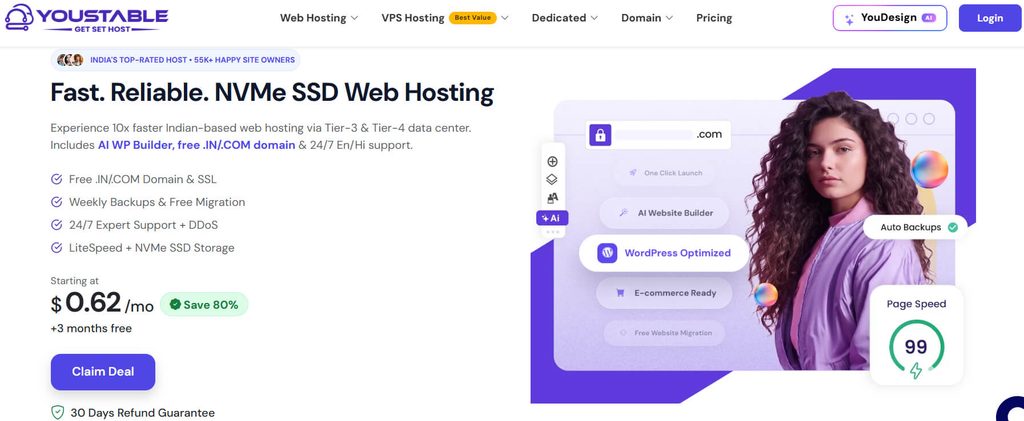
YouStable offers web hosting, WordPress hosting, VPS, dedicated servers, and domain services, with NVMe SSD storage, LiteSpeed, free SSL, backups, migration, and 24/7 support.
Shared web hosting starts at $0.62/month, while the current offer shows up to 80% off hosting, three extra months free, and a free domain with eligible plans.
Overall, YouStable suits bloggers, WordPress users, businesses, and growing projects needing performance focused hosting, flexible infrastructure, India based support, and an upgrade path from shared hosting to VPS or dedicated servers.
YouStable combines storage performance, caching, security, backups, migration, and website management features to cover common hosting requirements.
YouStable combines NVMe storage, LiteSpeed, caching, SSL, backups, and security tools to support website performance and everyday protection.
YouStable offers four hosting levels, from an entry level shared plan to dedicated infrastructure, making it easier to match resources with your website’s current needs.
| Plan | Price | What’s Included | Best For |
| Shared Plan | $0.62/mo | 1 website, 50 GB NVMe SSD, unmetered bandwidth, free SSL & email, one click backup restore, AccelerateWP + LSCache, Imunify360 | Blogs & growing websites |
| VPS Hosting | $3.67/mo | 1 CPU, 4 GB RAM, 50 GB NVMe SSD, 4 TB bandwidth, full root access, IN/NL/USA locations, 99.9% uptime | Developers & growing projects |
| Windows VPS | $19.99/mo | 2-core processor, 4 GB RAM, 60 GB NVMe SSD, 1 TB bandwidth, dedicated IPv4, 99.9% uptime, admin access | RDP, .NET & Windows apps |
| Dedicated Server | $77.99/mo | 4 CPU, 32 GB DDR4, 480 GB SSD, 10 TB/1 Gbps bandwidth, full root access, IN/NL/USA locations, multiple control panels | High traffic & critical applications |
The displayed offer includes up to 80% savings, with 3 extra months free on Shared, 2 extra months free on VPS and Windows VPS, and 2 extra months free on Dedicated Server. The screenshot also states renewal at the same price.
YouStable is well suited to users who want performance focused hosting, practical management tools, Indian support, and room to upgrade as their websites grow.

BigRock is an India focused domain and hosting company offering Linux and Windows hosting, WordPress hosting, VPS, dedicated servers, and related website services.
Its current Linux hosting lineup uses NVMe SSD storage and cPanel, with features such as free SSL, daily backups, email accounts, and malware protection on applicable plans.
Overall, BigRock is a practical Hostinger alternative for users who want hosting and domain services together, familiar cPanel management, and several plan levels for growing websites.
BigRock combines NVMe storage, cPanel management, backups, SSL, email, and website resources across its different hosting plans.
BigRock combines NVMe storage, caching, SSL, backups, and malware protection to support everyday website performance and security.
BigRock currently offers several Linux hosting tiers, with resources increasing as users move toward higher plans.
| Plan | Price | Resources | Best For |
| Standard | ₹69/mo | 20 GB NVMe, 1 website, 10 email accounts | Small websites |
| Business | ₹99/mo | 50 GB NVMe, 3 websites, 50 email accounts | Growing websites |
| Pro | ₹129/mo | 100 GB NVMe, 5 websites, 100 email accounts | Established websites |
| Ultimate | ₹149/mo | 200 GB NVMe, 10 websites, 200 email accounts | Larger websites |
These are current promotional monthly rates shown by BigRock. The current page separately lists renewal prices, so the introductory price should not be treated as the long term cost.
The Standard plan currently renews at ₹409/month, while Business, Pro, and Ultimate renew at ₹649, ₹759, and ₹989/month respectively. The exact billing term and current promotion should be checked before purchase.
BigRock is a strong fit for users who want a familiar hosting environment, domain services, cPanel, business email, and several resource levels.
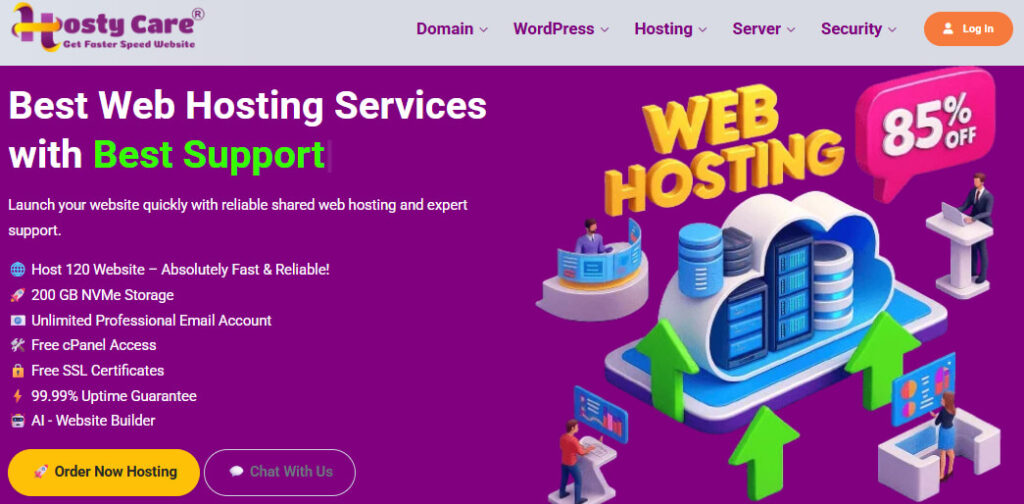
HostyCare is an India focused hosting provider offering shared hosting, WordPress, WooCommerce, VPS, cloud, and dedicated server solutions for different website needs.
Its shared hosting plans use NVMe storage and include features such as LiteSpeed with CDN, free SSL, migration, backups, malware scanning, and cPanel.
Overall, HostyCare is a strong Hostinger alternative for users who want generous resources, developer friendly tools, managed WordPress features, and hosting that can scale with growing websites.
HostyCare combines NVMe storage, LiteSpeed, security, backups, developer tools, and generous resource allocations across its hosting plans.
HostyCare combines NVMe storage, allocated CPU and RAM, LiteSpeed, CDN, backups, malware scanning, and attack prevention for hosting workloads.
HostyCare currently offers four shared hosting plans, with resources increasing substantially as you move toward higher tiers.
| Plan | Price | Resources | Best For |
| Basic | ₹59/mo | 25 GB NVMe, 1 CPU, 1 GB RAM | Personal websites |
| Starter | ₹129/mo | 50 GB NVMe, 2 CPU, 2 GB RAM | Small businesses |
| Business | ₹239/mo | 120 GB NVMe, 3 CPU, 3 GB RAM | Growing websites |
| Enterprise | ₹599/mo | 200 GB NVMe, 4 CPU, 8 GB RAM | Resource heavy websites |
HostyCare currently displays these prices for 36 month terms and states “Buy & Renew at the Same” on the plans. The applicable billing term, taxes, current promotion, and checkout details should still be verified before purchase.
The plans also include progressively higher PHP worker and I/O limits. For example, the Basic plan lists 30 PHP workers and a 6 MB/s I/O limit, while Enterprise reaches 120 PHP workers and 24 MB/s.
HostyCare fits users who want generous shared hosting resources, developer access, WordPress tools, and a broad feature set without immediately moving to VPS hosting.

UltaHost is a global hosting provider offering shared hosting, WordPress hosting, VPS, VDS, and dedicated servers for websites with different resource requirements.
Its hosting range lets users start with shared hosting and upgrade to higher resource plans as traffic and website requirements increase, rather than overpaying initially.
Overall, UltaHost suits users looking for multiple hosting levels, straightforward upgrades, website migration, and infrastructure that can accommodate growing projects without changing providers.
UltaHost combines shared hosting, WordPress tools, VPS infrastructure, upgrades, migration, and server options for different website requirements.
UltaHost provides multiple hosting environments, allowing websites to move toward dedicated resources when shared infrastructure no longer meets performance needs.
The supplied pricing screenshot shows several UltaHost hosting categories, but the exact promotional prices and billing terms can change.
| Plan | Price | Hosting Type | Best For |
| Shared Starter | $4.39/mo | Shared Hosting | New & small websites |
| VPS Basic | $6.89/mo | VPS Hosting | Growing websites |
| Power Plus | $47.29/mo | VDS Hosting | Higher resource projects |
| Ultra-X | $104.99/mo | Dedicated Hosting | High resource websites |
Prices shown are based on the supplied screenshot and should be verified against the current UltaHost checkout page before publication. Promotional pricing, billing duration, renewal rates, taxes, and included resources can vary by plan.
For a direct Hostinger alternative comparison, Shared Starter is the most relevant entry level option. VPS, VDS, and dedicated plans are better used to demonstrate UltaHost’s upgrade path for websites that eventually need more control and resources.
UltaHost is a good fit for users who want several hosting levels and the ability to upgrade as their website’s resource requirements increase.
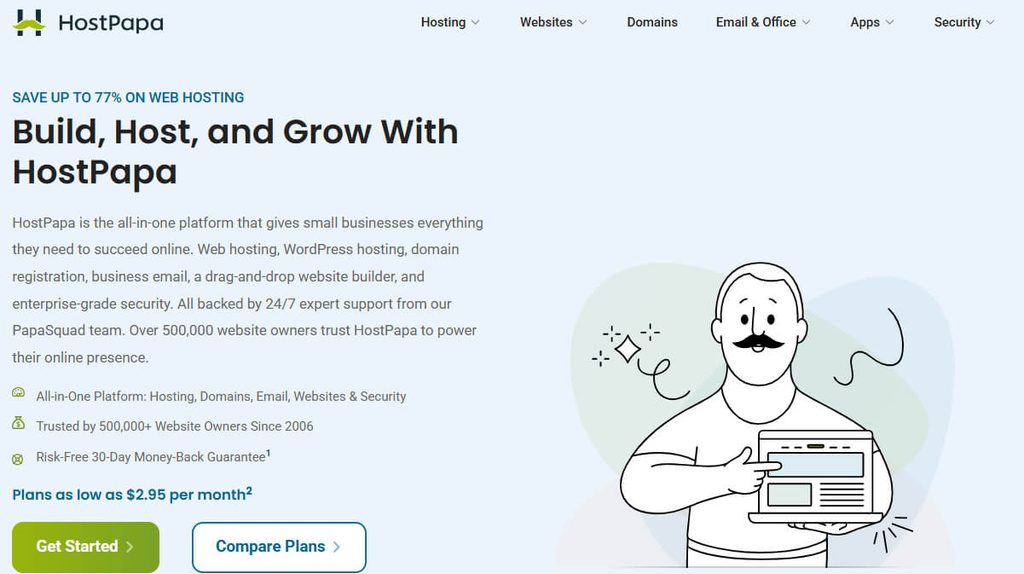
HostPapa is a web hosting company serving small businesses, WordPress users, and website owners through shared hosting, WordPress, VPS, and dedicated server solutions.
Its hosting platform combines website management, security, SSL, CDN, migration assistance, email, and multiple hosting options, giving users room to move beyond entry level hosting as requirements grow.
Overall, HostPapa is a suitable Hostinger alternative for small businesses and beginners who value managed hosting features, straightforward website management, and access to higher resource hosting options.
HostPapa brings website hosting, security, performance tools, migration assistance, and business focused services together across its hosting products.
HostPapa combines SSD based hosting, CDN support, caching, account isolation, SSL, and security tools to support website performance and protection.
HostPapa offers several hosting categories, allowing users to start with web hosting and move toward WordPress, VPS, or dedicated infrastructure.
| Plan | Price | Hosting Type | Best For |
| Web Hosting | $2.95/mo | Shared Hosting | Small websites |
| WordPress Hosting | $2.95/mo | WordPress Hosting | WordPress websites |
| VPS Hosting | $2.95 | VPS | Growing businesses |
| Dedicated Hosting | $59.95/mo | Dedicated Server | High resource websites |
*The prices above reflect the supplied screenshots and should be verified against HostPapa’s current plan page before publication. Promotional pricing can depend on the billing term, while renewal pricing may be different. HostPapa’s current India website separately lists its hosting categories and plan details.
For this Hostinger alternatives comparison, Web Hosting and WordPress Hosting are the most relevant entry level options. VPS and dedicated hosting are useful when a website needs more resources and greater server control.
HostPapa is a good fit for small businesses, beginners, WordPress users, and website owners who want managed features without immediately moving into complex server administration.
The five providers differ most in their target users, resources, performance features, and pricing structure. This quick comparison makes those differences easier to see before choosing a plan.
| Provider | Best For | Starting Price | Key Advantage |
| YouStable | Indian websites and growing businesses | ₹59/mo | NVMe storage and LiteSpeed |
| BigRock | Domains, small businesses, and cPanel users | ₹69/mo | NVMe hosting with cPanel |
| HostyCare | Budget users and resource focused websites | ₹59/mo | Strong CPU, RAM, and NVMe allocations |
| UltaHost | Growing websites and scalable hosting | $4.39/mo | Wide range of hosting options |
| HostPapa | Small businesses and beginners | $2.95/mo | Business focused hosting and support |
Starting prices are promotional rates shown by the respective providers or in the supplied pricing screenshots. Billing periods, renewal rates, taxes, and included resources can differ, so the current checkout price should be verified before purchase.
YouStable stands out for NVMe storage, LiteSpeed based caching, Indian hosting, and a broad upgrade path from shared hosting to VPS and dedicated servers.
BigRock is particularly useful for users who want domain registration and hosting together, along with cPanel, NVMe storage, email accounts, daily backups, and several shared hosting tiers.
Both providers emphasize NVMe based hosting and performance features. HostyCare stands out for clearly defined CPU, RAM, PHP worker, and I/O allocations across its plans, while YouStable offers a broader range of hosting products.
UltaHost offers a wider progression from shared hosting to VPS, VDS, and dedicated infrastructure. YouStable has a stronger India focused positioning and also provides VPS and dedicated hosting for users who need more resources.
HostPapa focuses strongly on small businesses, WordPress users, and managed hosting services. YouStable provides a more performance oriented India focused option with NVMe, LiteSpeed, and multiple server categories.
These recommendations are based on the features, pricing structure, and use cases discussed in the individual reviews. They should not be interpreted as universal rankings because the best hosting choice depends on website requirements, traffic, budget, and technical needs.
There is no single provider that will be the right choice for every website. The better option depends on your location, resources, budget, technical requirements, and how much your website is expected to grow.
YouStable is the strongest overall choice in this comparison for users who want NVMe based hosting, LiteSpeed caching, Indian support, migration assistance, and a clear path toward VPS or dedicated hosting.
BigRock makes sense for users who want domain registration and web hosting under one platform. Its cPanel based plans, NVMe storage, email accounts, daily backups, and multiple hosting tiers make it practical for small and growing websites.
HostyCare is particularly attractive when available CPU, RAM, storage, PHP workers, and I/O resources matter. Its higher shared plans provide considerably more resources, making it worth considering for websites that need more than a basic entry level package.
UltaHost is a good option for users who want flexibility as their website grows. Its range of shared, WordPress, VPS, VDS, and dedicated hosting gives customers several upgrade paths without requiring an immediate move to another provider.
HostPapa is well suited to small businesses and beginners who want hosting, WordPress options, security features, migration assistance, and business oriented services in one place.
For most users looking for a Hostinger alternative, YouStable offers the most balanced combination of performance focused technology, hosting choices, support, and scalability in this comparison. However, BigRock, HostyCare, UltaHost, and HostPapa can be better choices when a specific requirement, such as cPanel, higher shared resources, broader infrastructure options, or business focused services, takes priority.
The right Hostinger alternative depends on your website type, resource needs, budget, technical requirements, and expected growth. Follow these steps before selecting a hosting plan.
Start with your website type because hosting requirements differ between a blog, WordPress site, business website, and online store.
| Website Type | Usually Needs | What to Prioritize |
| Personal Blog | Basic resources | Affordable shared hosting, SSL, backups |
| WordPress Website | Moderate resources | Caching, PHP support, SSD/NVMe |
| Business Website | Reliable resources | Security, email, backups, support |
| Online Store | Higher resources | CPU, RAM, caching, backups, scalability |
Do not choose a plan only because it offers more storage. Check the resources that directly affect how your website operates.
Look at:
Storage and server resources are only part of the performance picture. Caching and content delivery can also influence how quickly visitors receive website pages.
Look for NVMe or SSD storage, LiteSpeed, LSCache, CDN support, and other server level optimization features. These features are particularly useful for WordPress websites and sites handling dynamic content.
Before buying, check exactly what security protection comes with the selected plan.
| Security Feature | What to Check |
| SSL | Is a free certificate included? |
| Backups | How often are backups created? |
| Malware Protection | Is scanning included with the plan? |
| DDoS Protection | Is traffic protection available? |
| Firewall | Does the hosting include an additional security layer? |
Also check whether these features apply to the specific plan you are considering, because hosting providers can offer different security features at different levels.
The starting price should not be your only consideration. Compare the promotional price with the renewal rate and check what is included in the package.
Pay attention to:
This gives you a clearer picture of the cost over the period you actually expect to use the hosting.
Support can save considerable time when moving a website or dealing with a hosting problem.
Check whether the provider offers:
For an existing website, free migration can be particularly useful because it reduces the technical work involved in moving from your current host.
Your website may need more resources as traffic, content, products, or database usage increases. Choosing a provider with a clear upgrade path can prevent another migration later.
A practical progression can look like:
Shared Hosting → Higher Shared Plan → VPS/VDS → Dedicated Server
Providers such as YouStable, BigRock, HostyCare, UltaHost, and HostPapa offer different hosting options, but the available upgrade path varies by provider.
Once you know your requirements, compare providers based on the features that matter most to you.
| Priority | Provider Worth Considering | Why |
| India-focused hosting | YouStable | India based hosting and broader infrastructure options |
| cPanel & domains | BigRock | Familiar cPanel environment with domain services |
| Shared resources | HostyCare | Clearly defined CPU, RAM, NVMe, PHP worker, and I/O limits |
| Hosting variety | UltaHost | Shared, WordPress, VPS, VDS, and dedicated options |
| Small businesses | HostPapa | Business focused hosting, email, and managed features |
The best Hostinger alternative is ultimately the one that fits your current website requirements, long term budget, performance expectations, and growth plans. Avoid paying for resources you do not need, but leave enough room for your website to grow without forcing an early migration.
YouStable is our top overall pick because it combines NVMe storage, LiteSpeed caching, Indian support, migration assistance, and VPS and dedicated server options.
HostPapa is a good option for beginners who need simple website management, WordPress hosting, security features, migration support, and business focused hosting services.
Yes, switching can make sense when another provider offers better resources, pricing, support, or features for your website. Compare the complete plan before moving.
Focus on the features that directly affect your website’s cost, performance, security, and future growth:
• Performance: NVMe/SSD, CPU, RAM, caching, and CDN
• Security: SSL, backups, malware and DDoS protection
• Pricing: Starting price, renewal cost, and billing term
• Growth: Higher plans, VPS, VDS, or dedicated servers
Hostinger remains a capable choice for many websites, but these alternatives show that there is no need to make the decision based on price alone. Resources, performance technology, security, support, and renewal costs can make one provider a better fit than another.
Among the five options, YouStable offers the most balanced package for users who want NVMe storage, LiteSpeed based caching, Indian support, migration assistance, and a path toward VPS or dedicated hosting.
BigRock is a practical choice for users who prefer cPanel and want domain and hosting services together. HostyCare stands out for its clearly defined resources and feature rich shared plans, while UltaHost offers a broad range of hosting environments for growing projects.
For small businesses and beginners, HostPapa remains worth considering because of its business focused services and multiple hosting options.
Before purchasing, compare the current plan price, renewal rate, billing term, included resources, and features for your specific website. The best Hostinger alternative is ultimately the one that meets your requirements without paying for resources you do not need.